

(first published 15 May 2026 on X.com)
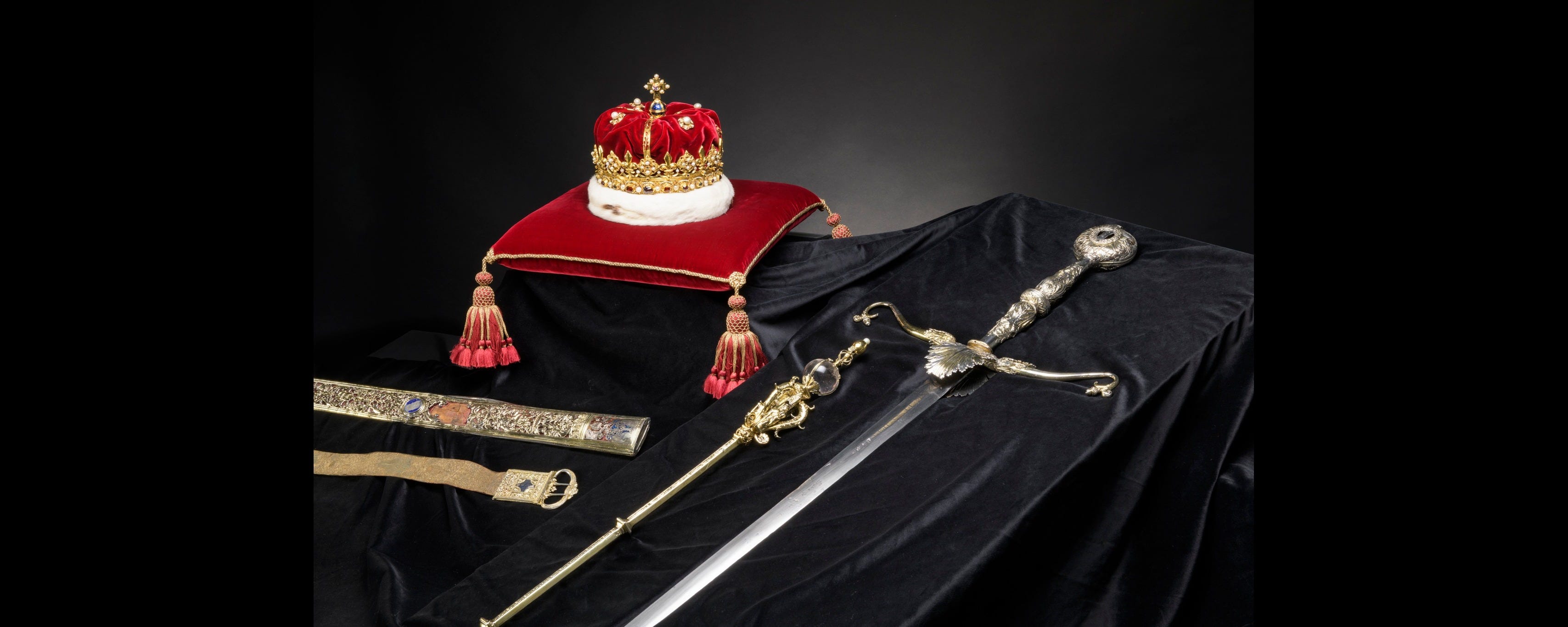
On either Tuesday 19 May or Wednesday 20 May 2026, John Swinney will attend the Court of Session in Edinburgh and will retake three oaths before the current Lord President Pentland. Westminster ‘enforces’ those three oaths through its ‘Promissory Oaths Act 1868’ and prescribes them for members of the ‘Scottish Executive’ via Section 84(4) of the Scotland Act 1998 — a Westminster statute that names them as the ‘Official Oath’ for the First Minister office, the ‘Official Oath’ as ‘Keeper of the Scottish Seal’, and the ‘Oath of Allegiance’ to ‘His Majesty King Charles’.
The ‘Oath of Allegiance’ John Swinney must take deserves careful scrutiny as it performs a duty that does not serve Scots and is grounded in an extractive framework alien to Scots Law and legal tradition. The operative text within, produced by the substitution mechanism in Section 10 of the same Act, names not a designation of official title in Scotland, England or the ‘United Kingdom’ for that matter but names a ‘natural person’: His Majesty King Charles. The Keeper of the Great Seal of Scotland will swear, as the precondition of holding the office for the new parliamentary term, that he will be faithful and bear true allegiance to that named ‘natural person’, his heirs and successors, according to law.
The constitutional position of John Swinney’s office — in continuum — and the substance of his allegiances, are now being re-asserted on the public record in advance of outcomes yet to be determined.
The Man Who Would Be King
The man ‘Charles Philip Arthur George Mountbatten-Windsor’ — whilst holding the English given title of ‘King of the United Kingdom of Great Britain and Northern Ireland’ crowned under English constitutional procedure — is not a sovereign title holder in Scotland. That distinction is not interpretive, it is a matter of fact and operative Scots constitutional law.
The standing Scots Law instrument known as the ‘Coronation Oath Act 1567’ — never repealed, operative across the centuries from the coronation of the infant James VI at Stirling through the last performance by Queen Anne in 1702 — establishes the constitutional requirement that any would-be monarch in Scotland must perfect that position through the Scottish Coronation Oath, itself a foundational instrument for the ‘Claim of Right 1689’ — preserved as a condition of the Treaty of Union itself, and affirmed by the House of Commons motion of 2018 — which codifies the constitutional consequences of breach: the relationship between the Scottish people and any monarch in Scotland is contractual, the Monarch must abide by the terms of service as a contractor holding emblematic regalia and heraldry as an instrument of the Scots people, and the failure to perfect the Coronation Oath constitutes forfeiture of any monarchical position in Scotland. Without the perfecting of the Scottish Coronation Oath, the constitutional position of representative sovereignty is not entered.
Charles Mountbatten-Windsor has not taken the ‘Scottish Coronation Oath’ so he is not the King of Scots.
The constitutional procedure to take up the position of King of Scots requires the Scots ceremonial procedures of the 1567 Act to be applied and fulfilled. The Westminster substitute act installed under the ‘Act for the Security of the Church of Scotland 1706’, taken at Westminster on accession to the English throne, strips out the sovereignty provisions of the original Scottish Coronation Oath that is legally required to validate his contractual service to preserve the sovereignty of Scots. Charles Mountbatten-Windsor has not sworn to uphold the Claim of Right 1689 and as such has not entered the contract that perfects the constitutional position of King of Scots.
The Stuart-era forfeiture mechanic does not apply to Charles Mountbatten-Windsor’s claim to the Scots throne either. James VII was held by the 1689 Convention of Estates to have forfeited the throne — he had not abdicated, nor had he been deposed, he had forfeited his representative position as King of Scots — because he had entered the constitutional contract and then violated its terms. The forfeiture mechanism became operational as he had committed a violation of his contract with the Scots people. Charles Mountbatten-Windsor has not entered any such contract. There is nothing to forfeit because the constitutional position was never taken up in the first place.
In Scots constitutional law, Charles Mountbatten-Windsor is just an ‘elite’ individual with a ‘pro non scripto’ claim to title in Scotland. The constitutional position of the title he seeks in Scotland is absent. The performance of the receipt of title — Royal Assent in Westminster procedural form, ceremonial appearances, the coronation regalia including the St Edward’s Crown and the Imperial State Crown, both duly worn — operates as the ‘official’ state anointment ceremony in the visible plane. The secondary ceremonial offering in Edinburgh did not involve the same levels of pageantry, nor was the Crown of Scotland adorned by the would-be monarch. The constitutional substance under Scots law was not present.
The constitutional delivery defects around the position ‘Charles Philip Arthur George Mountbatten-Windsor’ was usurped into on 6 May 2023 are not confined to Scots constitutional law, they operate equally on Westminster’s own statutory instruments.
The ‘Coronation Oath Act 1688’ — Westminster’s foundational coronation oath statute, never expressly amended since enactment — prescribes at Section 3 the statutory form of the oath: “Will You solemnely Promise and Sweare to Governe the People of this Kingdome of England and the Dominions thereto belonging according to the Statutes in Parlyament Agreed on and the Laws and Customs of the same?” The 1688 statutory text binds the monarch to govern the Kingdom of England, according to the Statutes in Parliament Agreed on, and the Laws and Customs of the same Realm. The oath actually administered to Charles Mountbatten-Windsor on 6 May 2023, deviates from the statutory (continuation) form in three specific respects, substituting the statutory oath’s wording with new: ‘the United Kingdom of Great Britain and Northern Ireland, your other Realms and the Territories’ for the statutory ‘Kingdome of England’; it omits the original phrase ‘according to the Statutes in Parlyament Agreed on’ — the clause that on the published academic record most clearly expresses the central Williamite constitutional concern, the binding of the monarch to Parliament’s sovereignty; and it modifies the religious binding territorially to ‘the United Kingdom’ while retaining the church binding only to ‘the Bishops and Clergy of England’. None of these deviations has any recorded statutory authority.
The lex scripta 1688 Act has not been amended to permit any deviations from its original and specific descriptive wording. The constitutional defects noted fall foul of primary statutory requirements within both legal jurisdictions. These breaches of constitutional statute were recorded in the 2017 peer-reviewed analysis by Graeme Watt (Barrister) published in the Ecclesiastical Law Journal. The analysis identifies the constitutional defect directly: “Any oath taken other than in accordance with the correct statutory form is contrary to law. Taking the authorised form of the oath is a condition on which the crown is held by any individual.” Charles Mountbatten-Windsor has not perfected the constitutional position under the 1567 Act’s Scots requirements, and has not perfected the constitutional position under the 1688 Act’s English requirements. The constitutional defects operate on both jurisdictions’ own primary statutory ground.
The previous article in the #SovereigntySeries (£414 Million Facade) established that the 1868 oath every MSP swears in Holyrood operates through the same substitution mechanism described in the opening of this article. The naming of an ‘individual’ rather than an ‘office bearer’ maintains the appearance of continuity over an unperfected constitutional appointment. The office of ‘King of Scots’, in Scots constitutional law, stands unperfected by the ‘natural person’ who currently covets but does not fulfil the title’s statutory obligations. The individual’s name fails to occupy the contractual space where a perfected office-holder is constitutionally required.
That is the unperfected ground. That is the constitutional terrain we have stood on for 319 years.
A Seal of Sovereign Intent
Although the Scots Crown remains vacant, this does not create a vacancy of responsibility, but instead results in an important and constitutionally critical invocation of long-standing high office.
The Great Seal of Scotland predates the Treaty of Union by 613 years, with the earliest surviving seal impression — held in the Treasury of Durham Cathedral — dating from 1094 under Duncan II. It is the operative authentication instrument of Scottish sovereign authority, in continuous institutional operation from medieval Scottish kingship through the Guardians of Scotland during the 1286-1306 vacancy, through the Declaration of Arbroath sealed by the Community of the Realm in 1320, through every Act of the pre-1707 Scottish Parliament, and onwards. It is not a gift of Westminster. It is not a creation of the Treaty of Union. The institution survives. The current institutional seal procedural mechanism — held as an instrument of office by John Swinney as ‘Keeper of the Great Seal of Scotland’ — operates within an unbroken constitutional office that has continued across at least nine centuries.
Article XXIV of the Treaty of Union Act 1707 is precise in its own primary text, establishing the validity of two distinct seal architectures, not one. A new Great Seal for the unified Kingdom of Great Britain — itself, in the Treaty’s own language, “different from the Great Seal now used in either Kingdom” — used for “Sealing Writs to Elect and Summon the Parliament of Great Britain”, “sealing all Treaties with Forreign Princes and States”, “all publick Acts Instruments and Orders of State which Concern the whole United Kingdom”, and “all other matters relating to England as the Great Seal of England is now used”. And, separately, a Seal in Scotland to be “alwayes kept and made use of in all things relating to private Rights or Grants which have usually passed the Great Seal of Scotland and which only concern Offices, Grants, Commissions, and private Rights within that Kingdom”. The Treaty of Union did not abolish the Scottish Seal, instead it preserved it, under the constitutional terrain of private rights — which is the constitutional terrain that the ‘Salvo jure cujuslibet’ doctrine governs in Scots law. The modern reference framing of the Scottish Seal as a Treaty of Union-created ‘replacement’ of the ‘Great Seal of Scotland’ instrument is a constitutional misattribution. The Treaty of Union did not create the Scottish Seal, it confirmed and preserved an existing constitutional instrument that has operated across six centuries and used the word “alwayes” within its preservation clause.
The ‘Treason Act 1708’ confirms the constitutional validity of the ‘Great Seal of Scotland’ from a second primary source. Section 12 of that Act — unrepealed in Scots law — makes any attempt to counterfeit “Her Majesty’s Seals appointed by the Twenty-fourth Article of the Union to be kept, used, and continued in Scotland” an offence of treason. A specific word the act uses for the Scottish Seal within Section 12 to define its contextual standing is “continued.” The constitutional pedigree of the Great Seal’s use as an instrument of Scots sovereignty is documented as far back as the primary record Canmore-era charters at Durham Cathedral. The Seal’s use has continued across more than nine centuries of continuous institutional operation, protected by standing criminal law at the highest tier. The Great Seal of Scotland is not simply a ceremonial designation but a sovereign constitutional instrument of the Scottish state that is required to validate the laws and statutes of the nation.
The modern political office of ‘First Minister’ was attached to the ancient constitutional position of ‘Keeper of the Great Seal of Scotland’ by Section 45 of the Scotland Act 1998. This attachment by Westminster is the modern administrative shell (devolution) imposed around the standing Scots constitutional sovereignty instruments. The Keeper’s office is operative under Scots constitutional law. The First Minister office is the Westminster-derived political role that was tagged onto this ancient office to give the Crown-In-Parliament the perceived legitimacy of being the granter of the constitutional position. The granting by Westminster is the performance layer, the ancient position is sovereign right expressed in continuum.
On either Tuesday 19 May or Wednesday 20 May 2026, John Swinney will attend the Court of Session and will retake three oaths before the current Lord President Pentland. Westminster ‘enforces’ the three oaths via its ‘Promissory Oaths Act 1868’ and prescribes them for members of the ‘Scottish Executive’ via Section 84(4) of the Scotland Act 1998 — the ‘Official’ Oath for the First Minister office, the ‘Official’ Oath as ‘Keeper of the Scottish Seal’, and the ‘Oath of Allegiance’ to ‘His Majesty King Charles’. In 1953, in MacCormick v Lord Advocate, Lord Cooper affirmed the constitutional distinctness of Scots law from English parliamentary sovereignty doctrine. The same Court has administered an English oath to the Scots Keeper since 1868. In the present case, the oath’s internal qualifier — ‘according to law’ — cannot bind it to the named natural person. That person has not perfected his constitutional position in the jurisdiction in which the Court is administering the oath. The English oath fails to bind by its own construction. The Scots constitutional architecture of the Keeper office — operative independently of the English oath and on its own constitutional foundation — is the substance the Keeper holds.
The Keeper of the Great Seal of Scotland is, by virtue of holding the standing Scots constitutional office, the appointed constitutional custodian of the operative authentication instrument of Scottish sovereign authority. The constitutional substance of that position is not constituted by the English oath taken at Westminster’s ‘appointment ceremony’; it is constituted by the standing Scots constitutional law. The office of Keeper is embedded within Scots Law architecture that has been operative on its own foundation across at least nine centuries, independent of any English instrument administered to its holders.
The Keeper holds the only working pen in the room.
The Honest Guardian
The composition of the Chamber — Holyrood — that the people of Scotland have returned, repeatedly, across more than twelve years of successive elections, within the Westminster-administered devolution framework, is the durable expression of the Community of the Realm’s instruction through the constrained franchise mechanism Westminster itself constituted. On 7 May 2026, that majority was renewed at 73 to 56 — the largest pro-independence return ever sent to Holyrood. The chamber’s MSPs who have just taken their oaths in the new parliamentary term are constituted with the same constitutional instruction the people have given consistently for over a decade. The ‘First Minister’ as Keeper of the Great Seal of Scotland sits at its head.
The ‘First Minister’, in their custodial capacity as Keeper, wields the operative authentication instrument of Scottish sovereign authority on behalf of the people. The function of the Keeper office in standing Scots constitutional law is one of custodial preservation and active duty — preserving the operative continuity of the constitutional instrument across the centuries. The Westminster statutory framework — the Scotland Act 1998 — encases this standing office within a legislative shell and imposes a perfecting process that routes through Royal Assent administered to the Keeper for sealing. That process operates downstream of the representative authority that the Scots people grant to the Monarch and Keeper roles — authority the named natural person has not perfected, leaving the process constitutionally defective on both 1567 and 1688 statutory grounds. The standing Scots constitutional architecture — the Seal, the Keeper office, the Claim of Right 1689, the Salvo doctrine, the Coronation Oath Act 1567 — operates on its own foundation, in continuous operation across at least nine centuries before the Scotland Act 1998 existed. The Keeper’s constitutional capacity, operating on this standing architecture, is to invoke the Salvo doctrine in custodial capacity of the standing constitutional instrument, on behalf of the Community of the Realm whose appointment placed him in the office. The constitutional act is the operation of standing Scots constitutional law through an office that exists independent of the Westminster framework.
The constitutional capacity and heritage of the Great Seal of Scotland has been operative for at least nine centuries. Section 45 of the Scotland Act 1998 has enclosed the Keeper office since it commenced in 1999 — twenty-six years of operative constitutional position within this devolutionary shell. The SNP government has held the Keeper position continuously since 2007 — nineteen years of unbroken custody across four named office-holders. John Swinney has held senior Scottish Government office continuously since 2007, in roles including Cabinet Secretary for Finance, Deputy First Minister, Cabinet Secretary for Education, and now First Minister and Keeper of the Great Seal of Scotland — nineteen years of personal record at the centre of the administration that holds the constitutional position.
Across each of these distinct frames, the same constitutional finding emerges. The Keeper office has remained an operative role throughout, and the constitutional capacity to act on behalf of Scots has remained available. The chamber has returned a pro-independence majority continuously since 2011. The Claim of Right 1689 has been on the statute book throughout, unrepealed. The Act salvo jure cujuslibet 1663 has been standing Scots law throughout, never repealed or overturned. Lord Cooper’s 1953 affirmation of Scots constitutional distinctness has been judicial record throughout, res integra.
In over 319 years, no Act of the Scottish Parliament has reaffirmed Scottish popular sovereignty under the Claim of Right 1689, exercising the constitutional capacity the Keeper holds. Not once since the Act of Union have these powers been brought to the floor on the people’s behalf. The Community of the Realm has given its instruction, repeatedly, yet each successive Keeper has held the Seal without delivering the primary duty of their office. The chamber has held the majority, the constitutional grounding, the operative power, yet not acted.
The examination of what has been ignored, within the Keeper’s constitutional position across nineteen years of senior office, nineteen years of SNP government custody, twenty-six years of operative office, is the examination of a record of non-performance. Whether deliberate or not, the trustee position has been held, yet the powers entrusted have not been performed. The Scots constitutional capacity has not been exercised in the very terrain where it has needed to be exercised for over three centuries. Whatever the reasons — political calculation, deference to the devolutionist framework, ideological commitment to the administrative Section 30 route, questions of legal legitimacy, fear of the Westminster response, or some combination — the constitutional consequence is the same: a continuous record of trustees in lock-stepped service to the Westminster administering framework rather than to the standing Scots Law constitutional office serving the interests of the Scots people.
The consequences of this record of non-performance against the available Scots constitutional powers have not solely been measured in votes cast — more tragically, they have been measured in the lives of Scots. Lives operating within the fiscally extractive architecture Westminster sets — an architecture Scots have the constitutional right and capacity to challenge, yet those in supposed service have not deployed that right and capacity. Lives lived through an ongoing drug-deaths crisis whose roots run through reserved-matters policy that the Keeper has the constitutional authority to challenge from outside the framework but has not. Lives lived under enforced economic hardship resulting in a history of child poverty and now a growing fuel poverty crisis. Lives lived under what Westminster likes to frame as ‘the settlement’ — a structure that diverts the main resources of Scottish wealth (energy, fisheries, whisky, land, and water) to extractive interests through Westminster’s reservation, while the constitutional instruments capable of changing that mechanism of extraction sit within the Keeper’s power, unused.
These are constitutional facts. The accurate naming and discussion of what is required of those empowered by Scots to remove the constitutional inertia is long overdue. The man who would be King has not entered the contract. The man who is Keeper has held the Seal without performing his duties. Now the constitutional functions of the Guardian of Scotland must be performed.
‘Custodially Held Judiciary?’
The ‘First Minister’, as Keeper of the Great Seal of Scotland, operates from within legal institutional architecture that is itself in a state of structural compromise. Whether the ‘First Minister’ can legally maintain this position is ultimately for Scots to decide.
Before the institutional compromise is detailed, a predictable Westminster colonialist counter-position requires dispatching. That counter-position will frame the ‘Keeper of the Scottish Seal’ as a ceremonial title attached to the First Minister office by Section 45 of the Scotland Act 1998, or alternatively will frame the modern ‘Scottish Seal’ as a Treaty-created administrative instrument that replaced the original Scottish constitutional seal. Neither framing carries constitutional weight in Scots law. The Keeper office is a standing office of state, in continuous operation across at least nine centuries before the Scotland Act existed. Section 45 did not create the office. It identified the modern political role that would hold the standing constitutional office. Westminster’s ‘ceremonial’ classification of the ‘Keeper of the Great Seal of Scotland’ as ‘Keeper of the Scottish Seal’ is an English constitutional category that has no jurisdiction over the constitutional character of Scots sovereign instruments — precisely the operation Lord Cooper named in 1953. The ‘replacement’ classification fails against the Treaty of Union’s own primary text: Article XXIV established a new Great Seal for the unified Kingdom of Great Britain and preserved a separate Seal in Scotland for matters of private rights, and the Treaty itself uses the word “alwayes” of the Scottish Seal’s continued operation. The Treason Act 1708, still in force in Scots law, uses the word “continued” for the same instrument. Two primary statutory sources, naming the same constitutional reality: a unified-kingdom seal was created for unified-kingdom matters, and the Great Seal of Scotland continued. The Seal authenticates Acts of the Scottish Parliament as it has authenticated Acts of every Scottish Parliament across nine centuries. The constitutional substance rests in standing Scots law and the office, not in any particular instrument that identifies the current holder.
The Court of Session, the ‘current’ senior civil court of Scots law, will administer the three oaths to John Swinney on either Tuesday 19 May or Wednesday 20 May 2026. It is the same Court that, through Lord Cooper in MacCormick v Lord Advocate 1953, registered the constitutional distinctness of Scots law from English parliamentary sovereignty doctrine. It is the institution that should constitutionally function as the senior judicial forum of the Scots constitutional jurisdiction.
The Court of Session does not, in its current operational form, function in that constitutional capacity and has failed to do so for such an extended period of time that it has undermined the weight of Scots Law and brought into question the very mechanisms of its own judicial honesty deferring on matters of standing Scots Sovereignty and authority.
Section 40(3) of the Constitutional Reform Act 2005 — Westminster legislation that took effect on 1 October 2009 — placed the UK Supreme Court above the Court of Session in civil jurisdiction. Scottish civil cases route, on appeal, to a body operating from within the administrative English Crown-In-Parliament system and a court within its confines that has no agreement under the Acts and Treaty of Union 1707. The Court of Session is no longer the final word on Scots civil law. Its decisions are subject to review by a court that operates from a constitutional tradition Lord Cooper’s 1953 affirmation explicitly distinguished from Scots law. The structural subordination of Scotland’s senior courts and Law Officers has operated continuously since at least 2009, and arguably for far longer.
The Union of 1707 is a treaty between two sovereign states — the Kingdom of Scotland and the Kingdom of England. Any modification to a key guarantee in that treaty requires the direct agreement of the sovereign people whose guarantee is being modified. For the Scottish party, the sovereign right holder and issuer is the Scots people, by the standing Scots constitutional principle the Claim of Right 1689 names. The Constitutional Reform Act 2005 was passed by Westminster without any such agreement — no Scottish referendum, no Scottish Parliament vote, no consent from the Scots people. On that foundational ground alone, the UK Supreme Court’s appellate position over Scottish civil cases is constitutionally illegal at source. The Court’s procedural claim to apply Scots law to Scottish appeals does not cure that defect. The defect is structural, not procedural.
The predictable Westminster colonialist counter-arguments here are threefold. None carries. The first invokes Article XIX of the Treaty of Union, which preserves the Court of Session “in all time coming, within Scotland… subject nevertheless to such regulations for the better administration of justice as shall be made by the Parliament of Great Britain.” Westminster will frame the Constitutional Reform Act 2005 as precisely such a regulation. The Cooper 1953 affirmation forecloses this reading. “Regulations for the better administration of justice” cannot extend to fundamentally restructuring the constitutional character of Scots law itself — which is what subordinating the senior Scots civil court to a UK Supreme Court built on English unitary-court doctrine does. Better administration sits within Scots constitutional foundations. The 2005 Act sits outside them.
The second invokes the Greenshields decision of 1709 — the House of Lords’ early assertion of appellate jurisdiction over Scottish civil cases — to claim that the UK Supreme Court 2009 merely inherits a jurisdiction the Treaty itself contemplated. The Treaty text contemplates no such thing. Article XIX preserved the Court of Session as the senior court of Scots civil jurisdiction; the Treaty made no explicit provision for appellate jurisdiction to the House of Lords. Greenshields imposed jurisdiction the Treaty did not grant. Subsequent practice across three centuries does not retroactively cure the original constitutional defect. An imposition repeated long enough does not become consent.
The third cites Section 28(7) of the Scotland Act 1998 — “this section does not affect the power of the Parliament of the United Kingdom to make laws for Scotland” — as a Westminster declaration of continuing sovereignty over Scotland. Section 28(7) is Westminster’s statement of its own position. It is not Scotland’s agreement to that position. The Claim of Right 1689 names the Scots people as the locus of sovereignty in Scotland. A Westminster statute declaring its own continuing power cannot, by its own statutory authority, override a constitutional principle that rests on Scots foundations. Three counter-arguments dispatched. The Section 40(3) subordination has no Treaty-based authority, no original Treaty contemplation, and no Scots constitutional consent.
Judges of the Court of Session are appointed by the Monarch on the recommendation of the First Minister under Section 95 of the Scotland Act 1998. The named natural person whose Royal Authority is invoked in those commissions has not perfected his constitutional position in Scotland — he has not taken the Scottish Coronation Oath, he has not sworn to the Claim of Right 1689. The commissions are issued under a Crown whose constitutional substance, in Scots law, is the same unperfected position that Act One of this article named. The judges sitting in the Inner House of the Court of Session in 2026 are operating under commissions whose Royal Authority is, in Scots constitutional law, unperfected at source.
The Court of Session interprets the competence of the Scottish Parliament through Schedule 4 and Schedule 5 of the Scotland Act 1998. The Scotland Act is the Westminster statutory instrument that established the modern Scottish Parliament under terms set by Westminster. The Court’s operational framework treats the Scotland Act as the constitutional map of the Scottish Parliament’s powers. The 2022 Reference by the Lord Advocate [2022] UKSC 31 case operated on exactly this premise — that Scottish parliamentary competence is bounded by Westminster’s statutory framework, with reserved matters defined by Westminster, with the ‘UK Supreme Court’ as the Crown-In-Parliament appointed ‘ultimate Determiner’ of where the boundaries fall. The label says Scottish Court. The operational mechanic is an enforcer of Westminster’s colonial framework’s dominance over standing Scots constitutional law.
The Salvo jure cujuslibet doctrine, codified in 1592 and again in 1663, remains operative Scots constitutional law and has never been repealed. Neither has it been extinguished by anything in the Treaty of Union Articles — the corrected reading of Scots constitutional law makes plain that the Scottish Parliament that ratified the Treaty had no constitutional capacity to alienate the standing constitutional architecture of the people, which it did not own. The doctrine is unrepealed, unextinguished, operative law.
The ‘captured’ Scottish legal system and its establishment have not lost the Salvo; they have refused to deploy what Scots Law’s own constitutional jurisdiction’s primary statutes require them to recognise and make use of. The institutional practice of modern Scottish judicial review has standardised toward UK administrative law principles, focusing on the process of decision-making rather than the substance of the sovereign rights of the people. The Scots judiciary have looked away from the Salvo for 319 years. The Salvo doctrine has been waiting patiently. The constitutional question — what the Court does when a Salvo-grounded challenge under the standing doctrine is properly mounted — has not been judicially determined since 1707.
This is the captured institutional legal architecture in which the Keeper of the Great Seal of Scotland is ‘apparently’ contained to perform the constitutional function of their office. The senior Scots civil court administered his oaths. The senior Scots civil court is subordinated to a higher court operating within another land and within a different constitutional legal tradition. The senior Scots civil court’s own judges are commissioned through Royal Authority unperfected in Scots law. The senior Scots civil court interprets the Scottish Parliament’s competence through Westminster’s ‘faux’ statutory cage. The senior civil court in Scotland has, in modern practice, refused to recognise the standing Salvo doctrine that is the standing operative protection of Scots private rights under Scots constitutional law.
The Great Seal of Scotland is not the property of the Court of Session, the Scotland Act 1998, the UK Supreme Court, or the named natural person whose constitutional position in Scotland is unperfected. The Seal is the operative authentication instrument of Scottish sovereign authority, in continuous use across at least nine centuries, surviving 1707 unmelted, held in personal custody by the constitutional office of Keeper. It is the source from which the Court of Session’s own legitimacy to act in Scotland derives. Every decree the Court issues, every warrant it grants, every commission it certifies, every judgement it perfects in Scots law — each one operates under the constitutional authority of the Seal.
If the Keeper of the Great Seal of Scotland applies the Seal, in custodial capacity under the Salvo doctrine, to a constitutional declaratory instrument reaffirming Scottish popular sovereignty under the Claim of Right 1689, the Court of Session faces a structural paradox with no resolution available to it.
The Court operates under the authority of the Seal applied by the constitutional Keeper — the authority Scots law has accorded it for centuries — and the captured wardens cease to be operationally captured at the moment they so operate.
The Seal wielded by the constitutional Keeper carries the authority Scots law has accorded it for centuries. This is the same Seal that authenticates the Court’s own jurisdiction to issue judgements. This is the same Seal that perfects every commission the Lord President holds. This is the same Seal that has authenticated every Act of every Scottish Parliament since the institution existed. The Seal carries the sovereign legal expression of every act of Scots law. The Seal carries the Court’s own foundation — the constitutional authority by which the judges sit, the Lord President presides, the warrants issue — all of which rely on the Keeper wielding the Seal. The Court can only deny the Keeper’s authority by ruling that the Court itself has no constitutional authority to sit and rule.
This is the constitutional paradox the captured Scottish People have been fighting against for centuries in their quest for self-determination. Scotland’s senior legal and political officers have, through what appears to be a lack of will, neglected to take any of the constitutional moves available to them against the Westminster shell — the Scotland Act 1998 and its amendments — which hangs as a threat to destroy their own foundation. The structural compromise of the Court of Session, the institutional refusal to engage the Sovereign Instruments of Scotland, its subordination to the UK Supreme Court, the operation under unperfected Royal commissions — none of it legally reaches the Seal. The Seal sits above the entire captured architecture as the constitutional key which delivers Scots Sovereign legitimacy.
The Keeper holds the only working pen in the room.
Scots have been patiently waiting through twenty-six years of devolution for someone to ask the constitutional question their own legal system has been constrained to avoid.
The Community of the Realm has been waiting for over twelve years for the Keeper to perform the constitutional function of the office it returned him to.
The security of our Scots Sovereignty was built by our forebears to be lasting. The architecture of our self-determination has always been with us. The key to unlocking the Westminster cage turns the moment ‘The Keeper’ applies the Seal, in custodial capacity under the Salvo doctrine, to a constitutional declaratory instrument reaffirming Scottish popular sovereignty under the Claim of Right 1689.
The current Keeper has not yet applied it.
The Loyalty Reaffirmation
The Keeper of the Great Seal of Scotland is in the constitutional position. The position is operative, sovereignty instruments are in their custody and the Holyrood chamber instruction is renewed. The ‘constitutional architecture’ has been named, and on the public record from the primary sources this article cites. The operation is what has been waiting.
The Community of the Realm — the sovereign Scottish people under the Claim of Right 1689 — has operated since 1999 through a devolved colonial franchise mechanism by which it returns a Scottish Parliament whose majority of powers are limited through reservation by the administering government in Westminster. The administrative form of the chamber was constituted by the Scotland Act 1998 as Westminster’s colonial instrument. The constitutional substance running through it — the people’s sovereign authority expressed through the franchise — predates the Scotland Act by centuries and is not constituted by it. The Community of the Realm uses whatever institutional form is available to it, including one Westminster has constructed for purposes of administrative control, to deliver its constitutional appointments. The Salvo jure cujuslibet doctrine’s continued operation through 319 years of Westminster’s purported authority is the precedent: the constitutional substance operates independent of the administrative shell, including a shell whose explicit design is to constrain that constitutional substance.
John Swinney still holds the office of Keeper of the Great Seal of Scotland by the appointment of the Community of the Realm, mediated through the chamber the franchise returned in 2024 and the modern political role of First Minister that Section 45 of the Scotland Act 1998 attaches to the standing Scots constitutional office. The Westminster-administered ceremony at the Court of Session on 8 May 2024 was the administrative ratification of an appointment the people had constitutionally already made. He is called to perform the constitutional function of the office he holds by their appointment.
The constitutional standing of Scots under the Claim of Right 1689 has not been extinguished. The Act salvo jure cujuslibet of 1592 and 1663, unrepealed and operative in Scots constitutional law, reserves to the writer — and to every member of the Scottish realm — the standing to assert that the constitutional rights and substance of the Community of the Realm cannot be extinguished by any particular legislative or institutional act. The current constitutional set-up the article has named — the unperfected Crown, the judicial public servants of the senior civil court, the modern political class’s continuous non-performance against the Scots constitutional office it has been administratively ratified into — operates against those sovereign rights. The Salvo’s protective doctrine, on the constitutional terrain Article XXIV of the Treaty of Union preserved the Great Seal of Scotland to authenticate, is invoked by the writer of this article and addressed publicly to the Keeper whose office is the operational custodian of that terrain.
The constitutional question now placed before him is whether he will, in the constitutional capacity of the office he holds by the Community of the Realm’s appointment, perform the function of the office on behalf of the constitutional substance the office exists to authenticate. The form of that performance is the constitutional matter the next piece in this series will name.
What this article has now placed before Scotland’s ‘Guardian of The Great Seal’ and the Scottish people is ‘the constitutional question’ itself presented against the backdrop of standing Scots law, including the unrepealed Salvo doctrine, on the public record and in the constitutional space the Treaty of Union itself preserved for the operation of Scots constitutional substance.
If the Keeper performs the constitutional function of their office, the operative constitutional architecture that has been dormant will, for the first time since 1707, be operated. The Scots constitutional substance Article XXIV preserved, the Salvo doctrine protects, and the Keeper office authenticates will become operationally visible on the contemporary public record and self-determination will move closer to being the Scots sovereign right that it has always been.
If the Keeper continues not to perform the constitutional function of their office, the Community of the Realm — by the standing constitutional authority documented on the public record across more than 740 years — has the constitutional capacity to appoint a Guardian who will perform those duties, specifically and in particular on the ‘constitutional question’ Scotland has wrestled with for centuries.
In 1286, on the death of Alexander III, the assembled Community of the Realm — the prelates, earls, and barons of Scotland — gathered at Scone and appointed six Guardians to hold the realm during the vacancy of the Crown. The appointment was the assembled body’s act, exercised on its own standing constitutional authority. No external permission was sought because none was constitutionally required. The Guardians acted in the name of the Community of the Realm and signed treaties on its behalf — the Treaty of Salisbury 1289, the Treaty of Birgham 1290 — that placed Scotland’s sovereignty on the international record under the seals they held in trust.
In 1310, the Declaration of the Clergy and the Barons codified the Community of the Realm’s standing right to choose, and if necessary replace, its king. The constitutional principle was declared as the operative foundation of the Scottish state, not aspiration but standing law.
In 1320, the Declaration of Arbroath placed on the international record, with the seals of the assembled magnates and clergy of the realm, the categorical statement of the Community of the Realm’s standing authority over the office of King: if any king should betray the realm, we would drive him out as our enemy and choose another to rule in his place who would be able to defend us. The principle has not been retracted. The Declaration has not been repealed. It stands as primary record of the standing constitutional mechanism of the Scottish people.
In 1689, the Convention of Estates assembled on the same standing constitutional foundation, forfeited James VII without seeking external permission, and constituted the settlement that followed. The Claim of Right 1689 was the codified product. It has remained on the statute book ever since. It was preserved as a condition of the Treaty of Union. It was reaffirmed by the House of Commons motion in 2018 with no Westminster repudiation following.
The standing constitutional authority by which the ‘Community of the Realm’ appoints those who hold the standing offices of Scotland in trust is operative. It is the constitutional practice of Scots law that has been on the public record across more than 740 years, unbroken and unextinguished. The specific form by which the ‘Community of the Realm’ exercises this standing in 2026 is itself the Community’s constitutional question to determine, be it via the reconvening of the ‘Convention of Estates’ or any other instrument enacted through the will of Sovereign Scots.
If the Keeper continues to fail to perform the duties of their office on the people’s behalf, the Community of the Realm has the right to exercise its standing authority to appoint a Guardian who will. There is no third position available under Scots constitutional law.
What comes next in the #SovereigntySeries in relation to the Keeper’s responsibilities will reach even further for a conclusion to ‘the constitutional question’ that has held a ‘people’s movement’ in a state of political inertia for too long.
Eòin J Màrtainn
#ClaimOfRight | #SalvoJureCujuslibet | #ScotlandAColony
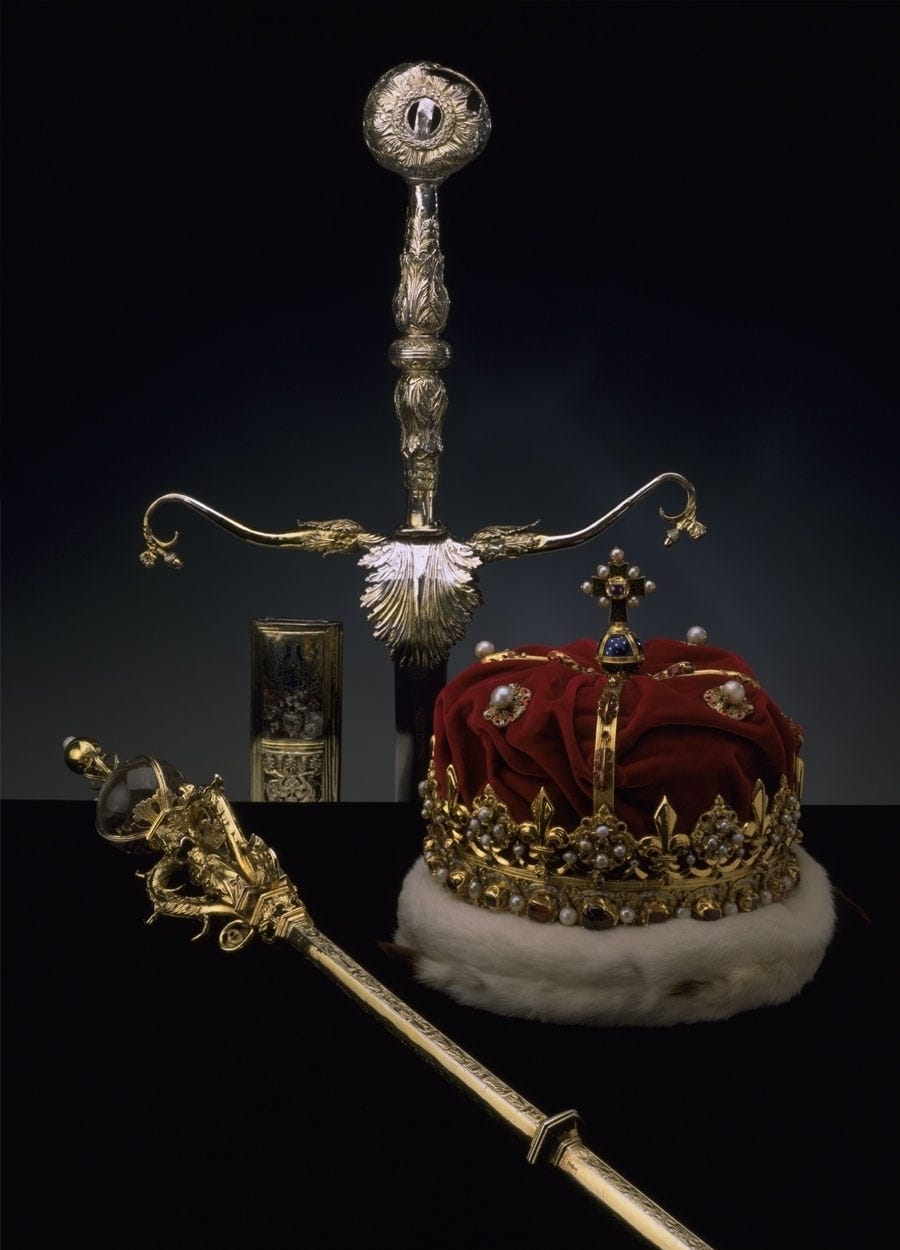
Insignia Regalia Scotiae - Seudan a’ Chrùin Albannaich - Honours o Scotland
Primary Sources
Statutory primary record
Treaty of Union Act 1707, Article XIX — preserves the Court of Session and other Scots courts within Scotland in all time coming, subject to regulations for the better administration of justice —
Treaty of Union Act 1707, Article XXIV —
Coronation Oath Act 1567 (c. 8) — Anent the Kingis aith to be geuin at his Coronatioun — Acts of the Parliament of Scotland (
legislation.gov.uk/aosp/1567/8/contents
); short title designated by Statute Law Revision (Scotland) Act 1964 (c. 80), Schedule 2; remains in force with no known outstanding effects per
official register; statutory foundation of the Scottish Coronation Oath; distinct from the Accession and Coronation Act 1567 (December c. 1), a separate procedural instrument confirming Mary Queen of Scots’ abdication and James VI’s accession, repealed by the Statute Law Revision (Scotland) Act 1906
Coronation Oath Act 1688 (1 Will. & Mar. c. 6) — Westminster’s statutory form of the English coronation oath; never expressly amended since enactment;
Treason Act 1708 (7 Ann. c. 21), Section 12 — still in force in Scots law
Promissory Oaths Act 1868 (31 & 32 Vict c. 72), Sections 2, 3, 10
Constitutional Reform Act 2005, Section 40(3) — effective 1 October 2009
Scotland Act 1998, Sections 28(7), 45, 45(7), 47, 84(1), 84(4), 84(5), 84(7), 95
Claim of Right 1689 — preserved as condition of the Treaty of Union; reaffirmed by House of Commons motion, 4 July 2018, without Westminster repudiation following
Act salvo jure cujuslibet 1592 — Records of the Parliaments of Scotland (RPS) 1592/4/60 —
Act salvo jure cujuslibet 1663 — Records of the Parliaments of Scotland (RPS) 1663/6/146 —
Case law primary record
MacCormick v Lord Advocate 1953 SC 396, at 411 (Lord Cooper of Culross, Lord President)
Greenshields v Magistrates of Edinburgh 1709 — early House of Lords assertion of appellate jurisdiction over Scottish civil cases (Court of Session decision 1709, House of Lords appeal decision 1711); constitutionally contested as imposition of jurisdiction not contemplated by the Treaty of Union 1707
Reference by the Lord Advocate of devolution issues under paragraph 34 of Schedule 6 to the Scotland Act 1998 [2022] UKSC 31
Historical constitutional record
Earliest surviving Great Seal of Scotland impression — 1094, under Duncan II — Treasury of Durham Cathedral
Treaty of Salisbury 1289; Treaty of Birgham 1290 — international treaties signed by the Guardians of Scotland in the name of the Community of the Realm
Declaration of the Clergy and Barons, 1310 — National Records of Scotland
Declaration of Arbroath, 1320 — addressed to Pope John XXII, sealed by the assembled magnates and clergy of the Community of the Realm
Convention of Estates 1689 — assembled on standing constitutional foundation, forfeited James VII, codified the Claim of Right 1689
Register of the Great Seal of Scotland — oldest national record of the Scottish state
Ceremonial / contemporary record
Scottish Courts and Tribunals Service — anticipated record of John Swinney’s re-swearing as First Minister and Keeper of the Scottish Seal, on either Tuesday 19 May or Wednesday 20 May 2026, before Lord President Pentland
Contextual published record
The £414 Million Facade,
— published constitutional record on the natural-person construction of the 1868 oath, the Corporation Sole versus Contractual jurisdiction architecture, the heirs-and-successors trap, and the Great Seal as counter-receipt to the absorption narrative
The Coronation Oath, Graeme Watt (Barrister), Ecclesiastical Law Journal, Volume 19, Issue 3, September 2017, pp. 325-341, DOI: 10.1017/S0956618X17000497, Cambridge Core — peer-reviewed academic analysis identifying that any coronation oath taken in deviation from the statutory form prescribed by the Coronation Oath Act 1688 is contrary to law; deviations since the coronation of Queen Anne documented through Lambeth Palace Library service books
Charles III Coronation Oath, 6 May 2023 — verbatim text of the oath administered at Westminster Abbey, published in the official Order of Service released by the Royal Household.